

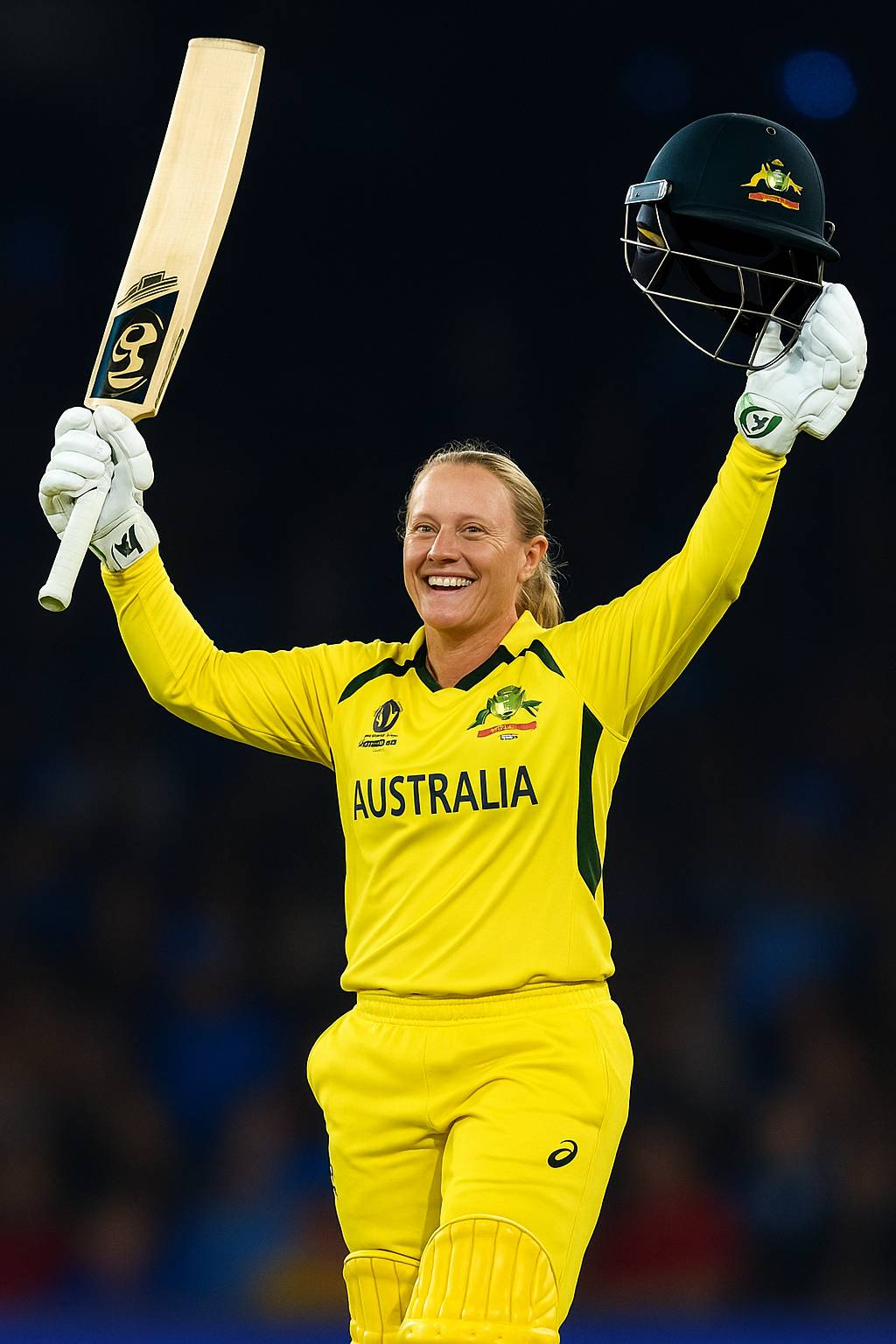
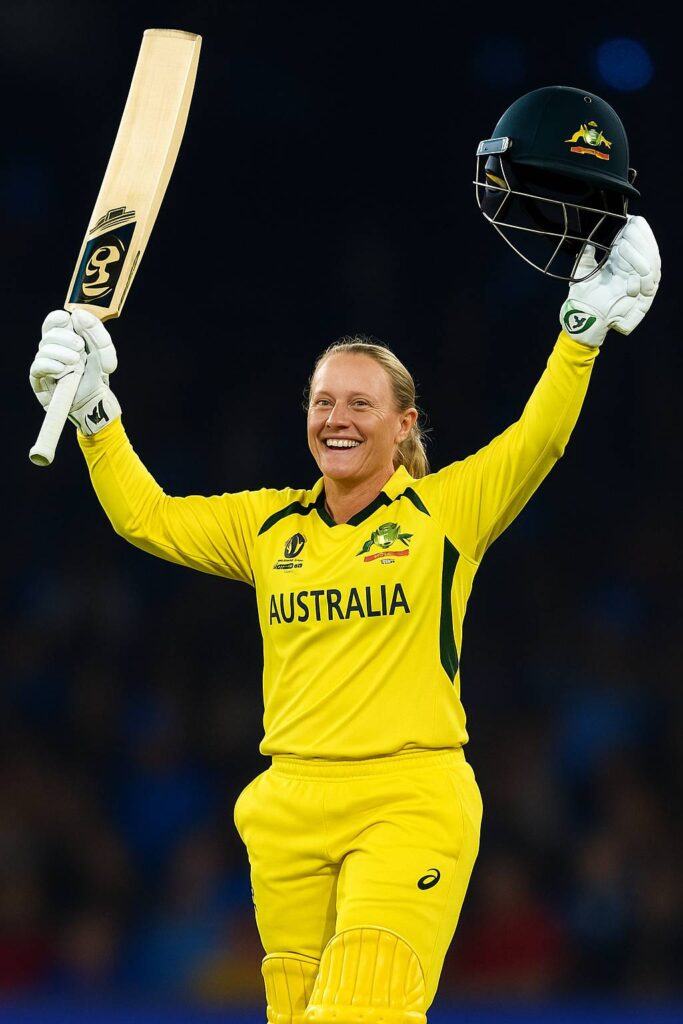
Alyssa Healy’s journey in cricket is a story of patience, transformation, and pure grit. Born on March 24, 1990, in Gold Coast, Queensland, Healy grew up surrounded by cricket. Her uncle, Ian Healy, is one of Australia’s most iconic wicketkeepers — a legacy that brought both inspiration and pressure. From a young age, Alyssa was known for her fearless attitude and raw talent, often being the only girl in boys’ cricket teams.
She made her international debut for Australia in 2010, but her early years were anything but smooth. She averaged 17.2 in her first 80 T20I matches at a strike rate of 112. Similarly, in the ODI format, she averaged just 15.96 in her first 52 matches. She had scored only one fifty in ODIs till 2016, well below the standards of the Australian women’s team. Alyssa Healy could not live up to the promise and potential she showed early on.
The failure to win the T20 World Cup in 2016 and then the Cricket World Cup in 2017 sparked soul-searching within the squad — and in no one more so than Alyssa Healy herself.
“I could have easily walked away from the game and been happy with what I’d done and that I’d contributed to successful teams,” Healy once admitted. But the numbers didn’t back it up, she averaged less than 18 in T20Is and 15.96 in ODIs before 2017.
A promotion to the top of the order in 2017, under the captaincy of Meg Lanning, changed the trajectory of Alyssa Healy’s career. Once she found her rhythm as an opener, Healy’s transformation was complete from a struggling batter to a match-winner feared by opponents. She played key roles with the bat in the 2018 T20 World Cup, 2020 T20 World Cup, and 2022 Women’s 50-over World Cup. Since 2017, she has averaged over 50 in WODIs and more than 35 in T20Is, making her one of the best wicketkeeper-batters in the world. Her work behind the stumps was never an issue, and now her batting was doing the talking. She brought immense value to the team in every sense.
Rising to the Big Occasions
Alyssa Healy is a player for the big moments. In her ODI career, she averages 32 in bilateral series, but that jumps to 42 in world tournaments proving she saves her best for the biggest stages. She has also scored seven hundreds in ICC events compared to three in bilateral ODIs, underlining her ability to rise when it matters most.
Ending on a High
Alyssa Healy has made it clear in many interviews that this World Cup 2025 will most likely be her last appearance in the One-Day format. She started the tournament with low scores against New Zealand and Pakistan but quickly bounced back, scoring a terrific century in a record run chase against India Women. She followed it up with another century against Bangladesh Women in the very next match.
In the post-match interview, Healy said, “We take the two points and move.” Australia Women have already qualified for the semi-finals, and their captain, Alyssa Healy, will be looking to finish on a high in this format. This is also her chance to win the Women’s World Cup as captain for the first time in her career. Regardless of what happens next, she will always be remembered as one of the greatest wicketkeepers the women’s game has ever seen.
After winning the ICC Women’s T20 World Cup in 2020, Alyssa Healy reflected, “I think the first ten years of my career probably did teach me a lesson about resilience and hanging in there. Hopefully, the last couple of years of my career will be pretty good fun.” She went on to score a stunning century against England in the final of the 2022 Women’s World Cup, helping Australia lift the title once again.
Looking back in 2025, Alyssa Healy can be proud of the remarkable turnaround in her career. She is more than just a keeper; she is Australia’s game-changer and a symbol of resilience for women’s cricket worldwide.
Courtesy: Mr Tarun (A cricket Enthusiast)